If you’ve ever spent time inside a busy GP surgery or treatment clinic, you’ll know how quickly the day moves. Patients come and go, clinicians switch rooms, equipment is handled constantly, and the same surfaces are touched hundreds of times before lunchtime. In that kind of environment, cross‑contamination isn’t just a possibility — it’s a constant risk. And unless cleaning is done with structure and intention, germs can travel far faster than most people realise.
At Green Fox Cleaning, we’ve worked in healthcare settings long enough to see the patterns. We’ve cleaned treatment rooms where the couch paper was changed regularly but the couch frame was overlooked. We’ve seen waiting rooms where the chairs were spotless but the armrests told a very different story. Cross‑contamination rarely comes from one big mistake; it usually comes from lots of small ones that add up over time.
(Healthcare & Medical Cleaning Complete Guide For Businesses)
Understanding how cross‑contamination actually happens
Cross‑contamination is simply the transfer of germs from one place to another. In medical settings, that can happen in dozens of ways — a cloth used in the wrong room, a disinfectant wiped off too quickly, a touchpoint missed during a busy shift. We’ve taken over sites where the cleaning team worked hard but didn’t have the right sequence, and the difference after retraining was immediate.
One of the biggest misconceptions is that “cleaning” and “disinfecting” are the same thing. They’re not. Cleaning removes dirt. Disinfecting kills germs. If the disinfectant doesn’t stay on the surface long enough, or if the cloth is already contaminated, the germs simply move around.
(The Importance of Correct Chemical Contact Times in Medical Environments)
Start with the right cleaning sequence
A good cleaning routine follows a clear order. We’ve seen cleaners start with the dirtiest areas first, only to spread germs across the room without realising it. In healthcare settings, the sequence matters as much as the products.
We always work from clean to dirty, and from high to low. Touchpoints come before floors. Sinks come before toilets. Treatment couches come before waste areas. When the sequence is right, the risk of cross‑contamination drops dramatically.
(Daily Cleaning Checklist for GP Surgeries & Clinics)
Colour‑coding removes guesswork
Colour‑coding isn’t a “nice to have” in medical environments — it’s essential. We’ve taken over contracts where the same cloth was used in waiting rooms and treatment rooms, not because the cleaner didn’t care, but because nobody had given them a clear system.
When every cloth, mop and bucket has a designated colour, mistakes disappear. It becomes second nature. And in a busy clinic, that clarity is invaluable.
(Why Colour‑Coding Matters in Healthcare Cleaning)
The cloth you use matters more than people think
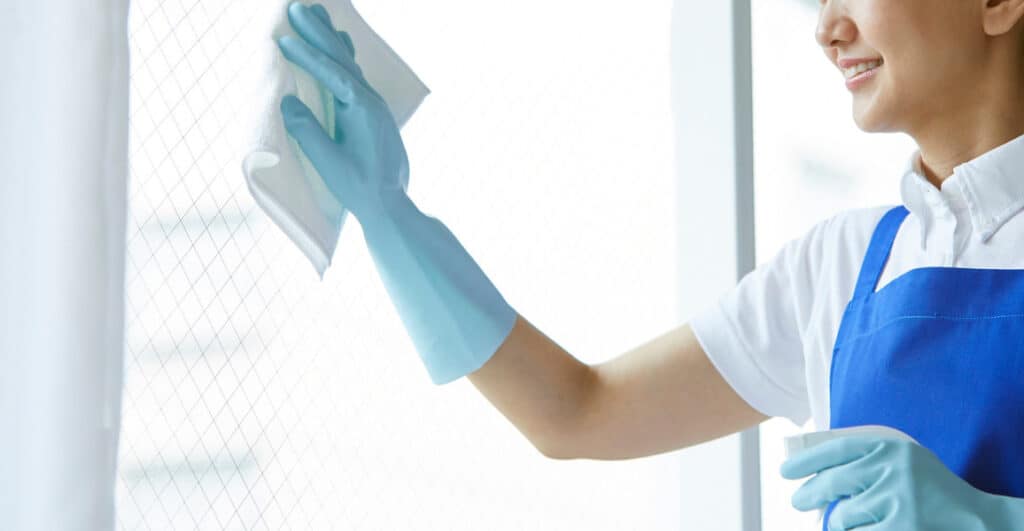
Microfibre cloths are incredibly effective at trapping bacteria, but only when they’re used correctly. Disposable cloths, on the other hand, are ideal for high‑risk areas where you don’t want to carry germs from one surface to another.
We’ve worked in clinics where switching to disposable cloths in treatment rooms instantly improved hygiene levels. In waiting rooms, microfibre often works perfectly — as long as it’s laundered properly and changed frequently.
Touchpoints are the real danger zones
Door handles, chair arms, light switches, taps, treatment couch levers, card machines — these are the places where germs spread fastest. We’ve cleaned clinics where the floors were immaculate but the touchpoints were missed, and that’s where cross‑contamination thrives.
A structured touchpoint routine, carried out consistently, is one of the simplest ways to protect patients and staff.
Chemical contact times must be respected
This is the mistake we see most often. A disinfectant is sprayed, wiped instantly, and the surface looks clean — but the germs are still there. Every disinfectant has a required “wet time” to kill bacteria and viruses. If it dries too quickly or is wiped off too soon, it simply can’t do its job.
When we train healthcare cleaning teams, this is one of the first things we focus on. Once cleaners understand contact times, the quality of disinfection improves overnight.
(The Importance of Correct Chemical Contact Times in Medical Environments)
In‑hours cleaning increases the risk — unless staff are trained properly
Many clinics now use a hybrid model: part in‑hours, part after‑hours. In‑hours cleaning is incredibly effective, but it also means cleaners are working around patients and staff. That increases the chance of cross‑contamination unless the cleaner understands sequencing, colour‑coding and infection‑control principles.
We’ve supported clinics where in‑hours cleaning transformed hygiene levels — but only because the cleaners were trained specifically for medical environments.
(Why DBS‑Checked Cleaners Are Essential in Healthcare Settings)
Waste handling plays a bigger role than people realise
Clinical waste, sharps bins, sanitary bins and general waste all need to be handled correctly. We’ve seen clinics where waste areas were the hidden source of cross‑contamination simply because the bins weren’t cleaned or emptied often enough.
A clean waste area reduces odours, prevents pest issues and stops germs spreading back into treatment rooms.
Why professional training is the real difference‑maker
Cross‑contamination doesn’t happen because people don’t care. It happens because they haven’t been trained properly. When cleaners understand infection control, sequencing, colour‑coding and chemical usage, the entire building becomes safer.
We’ve retrained teams who were doing their best with the wrong information, and the improvement was immediate. Healthcare cleaning is a skill — and when it’s done well, it protects everyone who walks through the door.
A safer clinic starts with the right cleaning habits
Cross‑contamination is preventable. With the right training, the right products and the right routines, clinics, surgeries and treatment centres can maintain a safe, hygienic environment that protects patients and staff.
If you’d like to learn more about how we support healthcare providers across the UK, you can visit our healthcare cleaning page here:
👉 Healthcare And Medical Cleaning Service