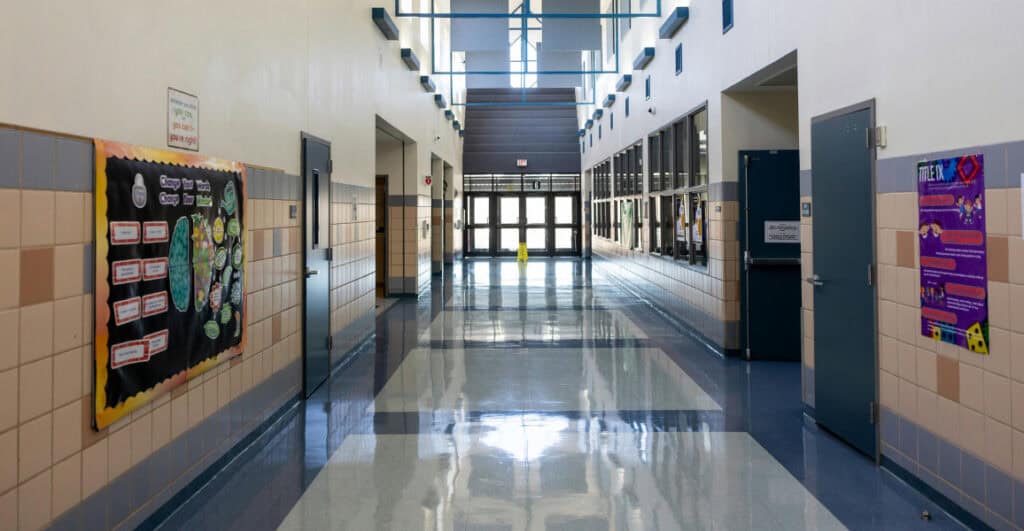
Educational environments are unlike any other workplaces. They’re busy, high‑traffic spaces where hundreds — sometimes thousands — of people move through the same corridors, touch the same surfaces and share the same facilities every single day. When you walk into a school first thing in the morning, you can almost feel the energy building before the students even arrive. And as anyone who has ever cleaned a classroom after a full day of lessons knows, schools don’t just get dirty — they get dirty fast.
At Green Fox Cleaning, we’ve spent years working inside nurseries, primary schools, secondary schools, colleges and specialist education settings. We’ve seen the challenges up close: the glitter explosions in reception classrooms, the science lab floors that somehow end up sticky, the sports hall that smells like a mixture of enthusiasm and teenage PE kits, and the toilets that need constant attention to stay hygienic. Educational cleaning isn’t just “commercial cleaning with smaller chairs” — it’s a discipline of its own.
This guide brings together everything we’ve learned from cleaning educational settings across the UK. It’s designed to help school leaders, business managers and site teams understand what good cleaning looks like, why it matters and how to choose a provider who genuinely understands the sector.
Why specialist educational cleaning matters
Schools are unique environments. They’re full of shared surfaces, shared equipment and shared spaces — and that means germs spread quickly. A single classroom can see dozens of hands touching the same desks, door handles, taps, keyboards and resources throughout the day. When you multiply that across an entire school, the hygiene challenge becomes clear.
We’ve seen first‑hand how quickly illnesses like norovirus, flu and strep can move through a school when cleaning isn’t up to standard. Conversely, we’ve also seen how a well‑structured cleaning routine can dramatically reduce sickness levels and improve attendance. Cleanliness isn’t just about appearance; it’s about safeguarding the health of students and staff.
Educational cleaning also plays a role in behaviour and wellbeing. A clean, well‑maintained school feels calmer, more organised and more respected. Students notice when their environment is cared for — and they respond to it.
(Article: How to Reduce Germ Spread in Classrooms)
What’s included in a professional educational cleaning service
Every school is different, but the core principles remain the same. When we take on a new educational site, we build a cleaning plan around the building’s layout, timetable and usage patterns. Here’s what that typically includes.
Classrooms
Classrooms are the heart of any school, and they require consistent, detailed cleaning. Desks, chairs, touchpoints, whiteboards, screens and ICT equipment all need attention. We’ve learned that the small things — like wiping chair backs or cleaning under desk edges — make a big difference to how a room feels the next morning.
(Article: Best School Cleaning Schedule)
Toilets and washrooms
These areas demand strict infection‑control procedures. Colour‑coded cloths, correct chemical contact times and consistent routines are essential. We train our teams to follow a structured sequence so nothing is missed and cross‑contamination risks are eliminated.
(Article: How to Clean School Toilets Properly)
Canteens and food areas
Food‑safe cleaning products, sanitisation routines and careful sequencing are crucial. We’ve seen how quickly crumbs, spills and fingerprints build up in these spaces — especially in primary schools where enthusiasm often outweighs accuracy.
Sports halls and gyms
These areas accumulate sweat, dust and odours faster than most people realise. We use specialist floor‑care techniques to protect surfaces and keep them safe for PE lessons and after‑school clubs.
Reception and communal areas
These are the first spaces visitors see. Clean floors, dust‑free surfaces and spotless glass make a strong impression and set the tone for the rest of the school.
Nursery and early‑years spaces
Younger children explore with their hands, faces and sometimes their entire bodies. Toys, mats, tables and soft furnishings need regular, child‑safe cleaning. We use products that are effective but gentle enough for early‑years environments.
(Article: How to Clean Nursery Toys Safely)
Infection control in educational settings
Schools are high‑transmission environments. It’s not unusual for us to receive calls from schools experiencing outbreaks of flu, norovirus or strep. When this happens, the cleaning approach needs to shift from routine maintenance to targeted infection control.
We train our teams to understand:
- correct chemical contact times
- how to identify high‑risk touchpoints
- how to prevent cross‑contamination
- when to escalate to enhanced disinfection
- how to work safely during outbreaks
One of the biggest issues we see in schools that clean in‑house is the “spray and wipe” habit — products being wiped off immediately, long before they’ve had time to work. This is where professional training makes a measurable difference.
(Article: What Are Cleaning Chemical Contact Times?)
Safeguarding and staff training
Cleaning in educational settings isn’t just about hygiene — it’s about trust. Every member of our team working in a school is enhanced DBS‑checked, trained in safeguarding awareness and fully briefed on site‑specific protocols.
We’ve worked in schools long enough to know that cleaners often become part of the fabric of the building. They’re the people who notice when a door isn’t closing properly, when a classroom heater is making a strange noise or when a child has left something important behind. That familiarity is valuable, but it also means professionalism is essential.
We ensure our teams understand:
- appropriate conduct around children
- confidentiality
- lone‑working policies
- key‑holding responsibilities
- how to report concerns
Schools need cleaners who are reliable, discreet and trustworthy — and we take that responsibility seriously.
(Article: Why DBS‑Checked Cleaners Are Essential in Schools)
Eco‑friendly and low‑impact cleaning options
Many schools are increasingly conscious of their environmental impact. We support this by offering eco‑friendly cleaning products, microfibre systems and waste‑reduction strategies.
Microfibre cloths, for example, remove more bacteria with less chemical use — but disposable cloths may still be necessary in high‑risk areas like medical rooms. The key is choosing the right option for each space, not applying a one‑size‑fits‑all approach.
(Article: Microfibre or Disposable Cloths?)
Out‑of‑hours vs in‑hours cleaning
Some schools prefer cleaning after hours when the building is empty. Others want daytime cleaning to keep toilets, canteens and communal areas fresh throughout the day. We work with both models.
Out‑of‑hours cleaning allows for deeper work without disruption.
In‑hours cleaning keeps high‑traffic areas consistently hygienic.
Most schools benefit from a combination of the two.
Deep cleaning and periodic services
Daily cleaning keeps a school running smoothly, but periodic deep cleaning is essential for long‑term maintenance. We typically carry out deep cleans during half‑terms, Easter and summer holidays.
These services can include:
- carpet cleaning
- floor stripping and sealing
- sports hall floor maintenance
- high‑level dusting
- kitchen extraction cleaning
- window cleaning
We’ve seen schools transform over the summer when these tasks are done properly — it sets the tone for the entire year.
(Article: How Often Should a School Be Deep Cleaned?)
How to choose the right educational cleaning company
Choosing a cleaning provider for a school isn’t the same as choosing one for an office. You’re not just looking for good cleaning — you’re looking for reliability, safeguarding, consistency and communication.
From our experience, the best cleaning companies for schools are those that:
- understand the rhythm of the school day
- train staff specifically for educational environments
- use products with short contact times
- have strong supervision and quality checks
- can scale up during outbreaks or busy periods
- communicate clearly with site teams
If a provider doesn’t understand why a Year 1 classroom needs a different approach to a sixth‑form study area, they’re not the right fit.
Why schools trust Green Fox Cleaning
We’ve built long‑term relationships with schools across the UK because we understand the sector inside out. Our teams are local, highly trained and supported by supervisors who know the importance of consistency in educational settings.
Schools trust us because:
- our staff are enhanced DBS‑checked
- we use products with short, effective contact times
- we train cleaners specifically for educational environments
- we offer flexible schedules to suit the school day
- we respond quickly when needs change
- we take safeguarding seriously
- we deliver the same high standard every day
When you walk into a school first thing in the morning and see classrooms that look calm, fresh and ready for learning, you know the cleaning team has done their job well. That’s the standard we work to.
In summary
Educational cleaning isn’t just about keeping a building tidy — it’s about creating a safe, healthy and positive environment for students and staff. With the right cleaning partner, schools can reduce illness, improve wellbeing and maintain a space that supports learning.
If you’d like to learn more about how Green Fox Cleaning can support your school, nursery or college, you can visit our educational cleaning page here:
👉 Educational Cleaning Service