We would love to hear from you, to discuss how our business can help yours. We would be delighted to visit your premises to provide a free no obligation quote, whether you are yet to employ a cleaning company, or if you are unhappy with your current one. You can either call us on 0333 050 1139 or fill in this form - We will call you back as soon as possible.
What causes sticky floors? 5 common causes, with great tips to stop this problem.
Table of Contents
Sticky floors and floor cleaning bring their own challenges to most venues, even though on the surface it seems like a simple task. You vacuum or sweep, add some chemical to a bucket, mop the floor — job done, right?
Not quite.
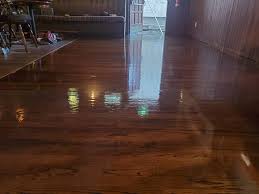
Sticky floors are one of the most frustrating cleaning issues for businesses. We’ve all been in that pub or club where every step feels like peeling Velcro off the ground. It’s unpleasant, unhygienic and gives a terrible impression.
If you don’t understand the main causes of sticky floors, it can feel like there’s no solution. You mop, scrub and repeat — only for the floor to end up stickier than before.
So what’s really going on?
Why are my floors sticky?
There are several reasons your floors may feel sticky, and surprisingly, your attempts to clean them might actually be making the problem worse.
Let’s break down the five most common causes — and how to fix them.
1. Using too much cleaning product
Many people assume that more cleaning solution equals a cleaner floor. Three pumps must be better than one… right?
Wrong.
Using too much product leaves behind a soapy residue, which dries into a sticky film. This is one of the most common causes of sticky floors.
How to fix it:
Read and follow the instructions on the label
Use the correct dilution rate (the right ratio of water to product)
Avoid “just in case” extra product — it does more harm than good
This simple change alone can eliminate sticky floors completely.
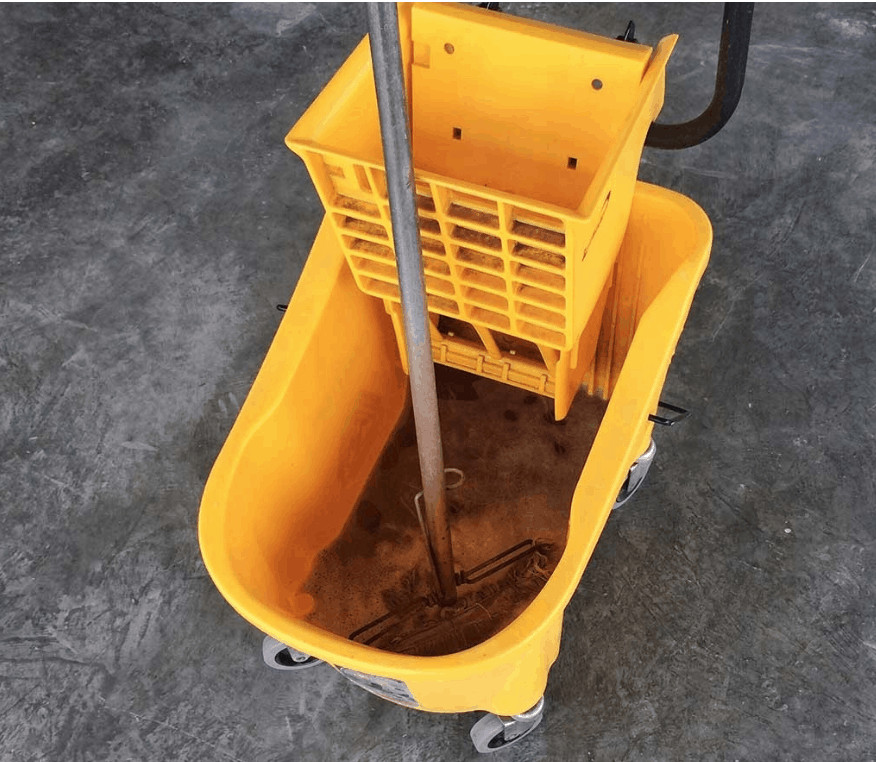
2. Not changing your mop water often enough
If you mop your entire venue using the same bucket of water, you’re not cleaning — you’re spreading dirt around.
Dirty water = dirty floors. Dirty floors = sticky floors.
This is especially important in high‑footfall venues like pubs, clubs, restaurants and healthcare environments.
How to fix it:
Change the water as soon as it becomes cloudy or discoloured
Remove debris floating on top or sitting at the bottom
In busy venues, you may need to change water every 10 square metres
After mopping, rinse the floor with clean water
Failing to change mop water also increases the risk of cross‑contamination, which is a major hygiene issue.
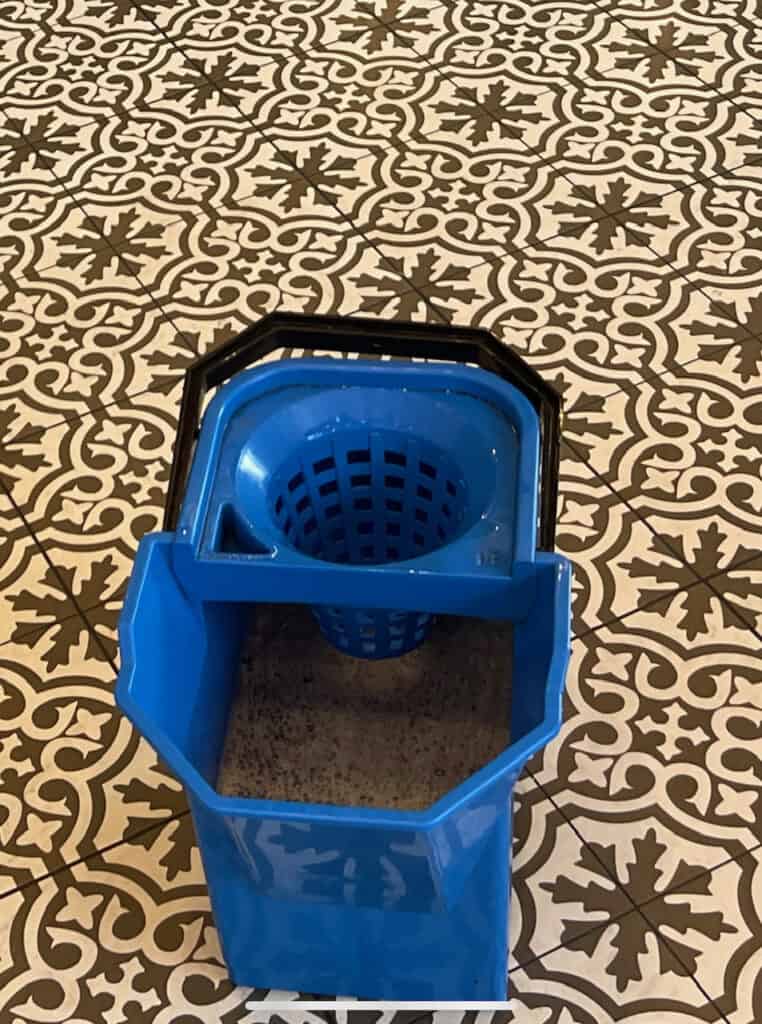
Change water frequently when cleaning floors
FUN FACT - Dirty Sticky Floors was the first solo single by Depeche Mode vocalist Dave Gahan
3. Using the wrong product
Not all dirt is the same — and not all cleaning products work on all types of residue.
The basic rule:
Use a cleaner with the opposite pH of the dirt you’re trying to remove.
For example:
Acidic cleaners work best on alkaline dirt
Alkaline cleaners work best on acidic dirt
If you use the wrong product, the dirt won’t break down properly — and the residue left behind can make floors sticky.
How to fix it:
Choose products designed for your specific floor type
Use specialist chemicals for stubborn or unusual stains
If unsure, ask a supplier or speak to us for guidance
Correct product selection protects your floor and improves cleaning results.
4. Poor or badly maintained equipment
Even the best cleaning product won’t work if your equipment is letting you down.
Common issues include:
Old mop heads
Dirty buckets
Worn‑out mop fibres
Low‑quality equipment
If your mop head has been attached for weeks without being washed, it’s spreading bacteria and residue — not removing it.
How to fix it:
Replace mop heads regularly
Clean buckets and equipment after every use
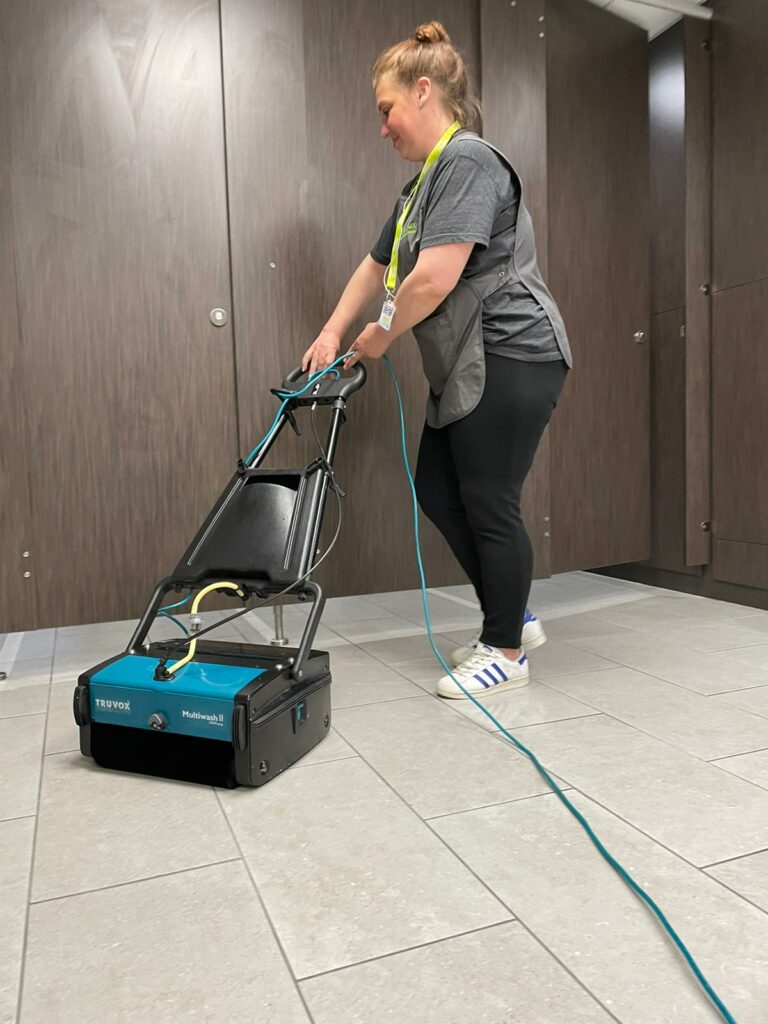
Consider upgrading to professional floor‑scrubbing machines
Advanced machinery delivers deeper cleaning in a fraction of the time.
Professional machinery will help eliminate sticky floors
5. Cleaning not completed often enough
It sounds obvious, but irregular cleaning leads to sticky floors.
Spilled drinks, sugary residues, dirt from shoes and general foot traffic all contribute to stickiness. If cleaning isn’t done frequently enough, the build‑up becomes harder to remove.
How to fix it:
Implement a structured cleaning schedule
Increase frequency in high‑traffic areas
Ensure staff are trained in correct cleaning methods
If you already have a cleaning company and still have sticky floors, it’s a sign of poor training or poor processes — and it may be time to review your options.
Why sticky floors matter more than you think
Sticky floors aren’t just unpleasant — they’re a hygiene risk and a safety hazard. They trap dirt, increase slip‑and‑fall risks, and give customers and staff a negative impression of your business.
A clean, non‑sticky floor signals professionalism and care. A sticky floor does the opposite.
Quick checklist to prevent sticky floors
Here’s a simple checklist your team can follow:
Use the correct dilution rate
Change mop water frequently
Use the right product for the job
Maintain equipment properly
Clean regularly and consistently
Small changes make a big difference.
In summary
Sticky floors are a common problem — but they’re also completely preventable with the right approach.
At Green Fox Cleaning, we work across all sectors and use the best products, equipment and training to ensure your floors look great every day.