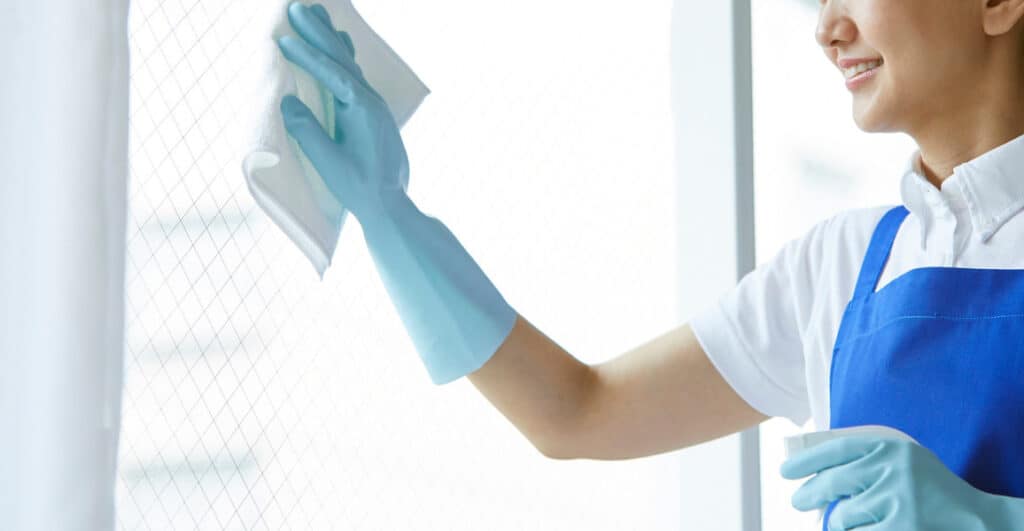
If there’s one thing we’ve learned from years of cleaning GP surgeries, dental practices and treatment clinics, it’s that disinfectants don’t work by magic. They work by time. The product needs to sit on the surface long enough to kill bacteria and viruses — and if it doesn’t, the surface may look clean, but it isn’t safe.
You’d be surprised how often this gets overlooked. We’ve taken over healthcare sites where cleaners were working hard, using the right products, following the right colour‑coding system… but wiping disinfectant away far too quickly. Once we corrected that single habit, the hygiene levels in the building improved almost immediately.
(Healthcare & Medical Cleaning Complete Guide For Businesses)
Why contact times matter so much in healthcare settings
Medical environments are high‑risk by nature. Patients arrive with infections, weakened immune systems or conditions that make them more vulnerable. Surfaces are touched constantly — treatment couches, door handles, reception counters, equipment knobs, taps, keyboards. If disinfectants aren’t given time to work, germs spread quickly.
We’ve seen treatment rooms where the couch was wiped down between every patient, but the disinfectant was removed before it had time to kill anything. The room looked spotless, but the risk was still there.
(How to Clean Treatment Rooms to Clinical Standards)
The “spray and wipe” habit is the biggest problem
Most disinfectants need to stay wet on the surface for a specific amount of time — sometimes 30 seconds, sometimes two minutes, sometimes longer. But in busy clinics, it’s common to see cleaners spray a surface and wipe it instantly. It’s not laziness; it’s habit. People assume that if the surface looks clean, the job is done.
We’ve retrained teams who were unknowingly wiping away disinfectant before it had time to work. Once they understood the science behind contact times, their entire approach changed.
(How to Prevent Cross‑Contamination in Medical Settings)
Different products have different requirements
Not all disinfectants are created equal. Some work quickly, others need more time. Some are designed for clinical surfaces, others for general areas. We’ve taken over sites where the wrong product was being used in treatment rooms, and the cleaning team had no idea the contact time was completely different.
When we introduce medical‑grade products with clear instructions, the cleaning routine becomes far more reliable.
How to make contact times easy to follow
The key is simplicity. In the healthcare sites we support, we make sure:
- the product label is clear
- the contact time is easy to understand
- cleaners know which surfaces need which product
- the routine allows time for the disinfectant to work
We’ve seen practices where simply switching to a product with a shorter contact time made the workflow smoother for both cleaners and clinicians.
(Daily Cleaning Checklist for GP Surgeries & Clinics)
Contact times matter most on high‑touch surfaces
Some surfaces are touched dozens of times an hour. These are the places where correct contact times make the biggest difference:
- treatment couches
- chair arms
- door handles
- taps
- light switches
- equipment handles
- reception counters
- check‑in screens
We’ve cleaned clinics where the floors were immaculate but the touchpoints were being disinfected incorrectly — and that’s where infection spreads fastest.
(How to Clean Waiting Rooms Safely)
Why contact times support CQC compliance
CQC inspectors don’t just look at whether a building is clean — they look at whether the cleaning is effective. If disinfectants aren’t being used correctly, the practice isn’t meeting infection‑control standards.
We’ve supported practices through inspections where demonstrating correct contact times made a strong impression on inspectors. It shows that the cleaning team understands the environment and is trained properly.
(What Are CQC Cleaning Requirements?)
Training is what makes the difference
Contact times only work when cleaners understand them. We’ve retrained teams who were doing their best with the wrong information, and the improvement was immediate. Once cleaners understand why contact times matter, they naturally adjust their routine.
It’s one of the simplest ways to raise hygiene standards across the entire building.
(Why DBS‑Checked Cleaners Are Essential in Healthcare Settings)
A safer clinic starts with correct product usage
When disinfectants are used properly, infection risk drops, staff feel more confident and patients feel reassured. It’s a small detail with a huge impact — and one of the easiest ways to improve hygiene in medical environments.
If you’d like to learn more about how we support healthcare providers across the UK, you can visit our healthcare cleaning page here:
👉 Healthcare And Medical Cleaning Service