We would love to hear from you, to discuss how our business can help yours. We would be delighted to visit your premises to provide a free no obligation quote, whether you are yet to employ a cleaning company, or if you are unhappy with your current one. You can either call us on 0333 050 1139 or fill in this form - We will call you back as soon as possible.
Can you clean upholstery with a steam cleaner safely without damage?
Table of Contents
Can you clean upholstery with a steam cleaner safely without damage?
Steam cleaners are incredibly useful tools, both at home and in the workplace. If you need to clean delicate upholstery, fabric furniture or even sanitise a mattress, a steam cleaner can be one of the most effective and efficient tools you’ll ever use.
Steam cleaning doesn’t just lift dirt and remove embedded stains — it also sanitises surfaces and helps reduce allergens. On top of that, steam treatment can kill bacteria, mould, bedbugs, viruses, dust mites and many other pathogens.
Used correctly, it’s a powerful and safe way to refresh upholstery without harsh chemicals.
How to clean upholstery with a steam cleaner
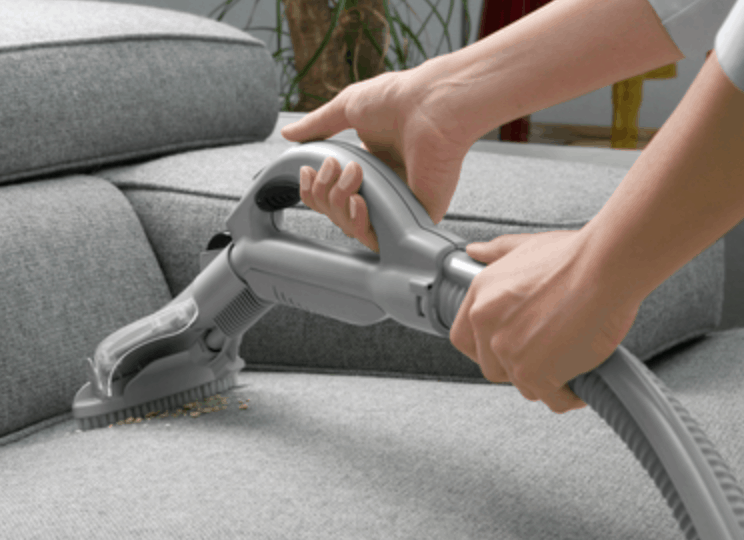
“Important — before you begin any treatment on upholstery, vacuum it fully using a soft brush attachment that won’t damage the furniture, and be sure to vacuum every nook and cranny.”
Green Fox Cleaning accredited trainer
A proper vacuum is essential. Steam cleaning works best when loose dust, crumbs and debris have already been removed.
Pre‑treat any obvious stains
Once the upholstery has been vacuumed, deal with any visible stains first. Use an upholstery spot cleaner and check the bottle for the correct contact time — this is how long the product needs to sit before you blot it.
After the contact time has passed, gently blot the stain with a clean, soft cloth. This helps lift the mark before you begin steaming.
Pre‑condition the upholstery fabric
One of the biggest advantages of steam cleaning is its ability to loosen and remove ground‑in dirt. A good pre‑conditioning product helps break down this dirt before the steam cleaner gets to work.
Spray the pre‑treatment onto the fabric and allow it to sit for the recommended time. Using a very soft brush, gently work the product into the fabric. You’re not scrubbing — just helping the solution reach the fibres.
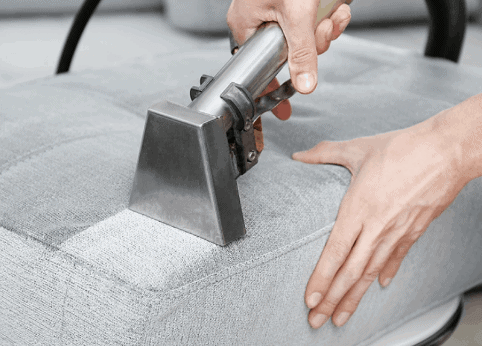
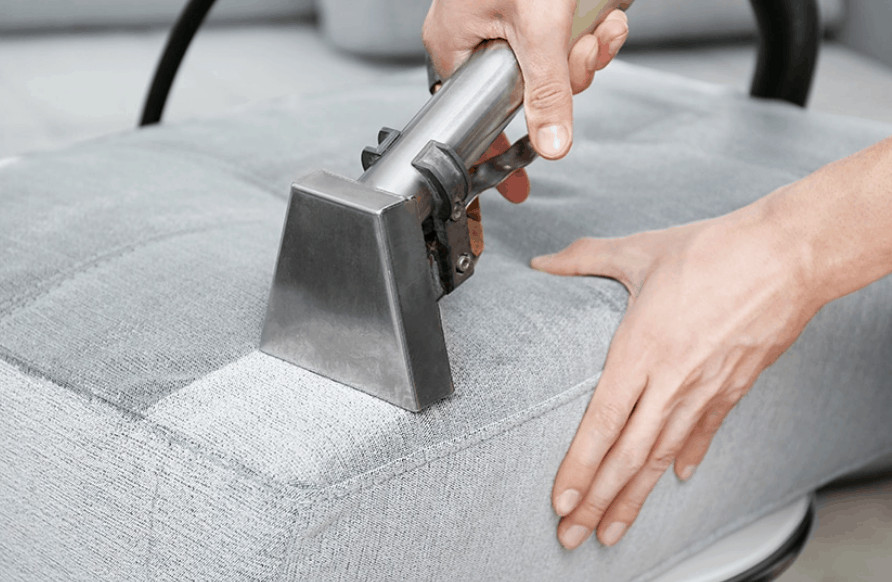
Use the steam cleaner
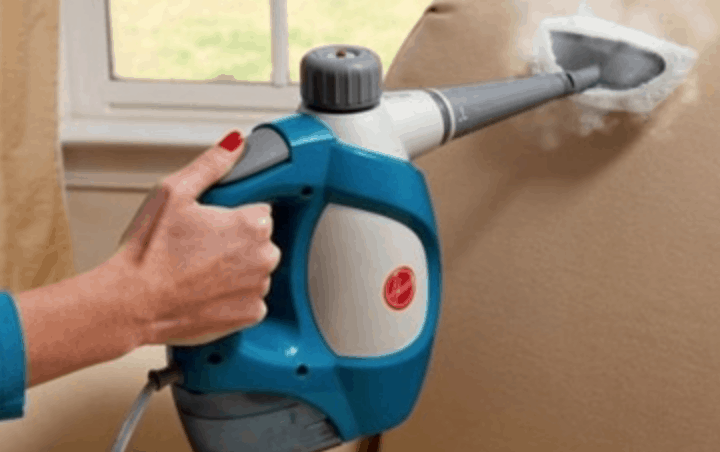
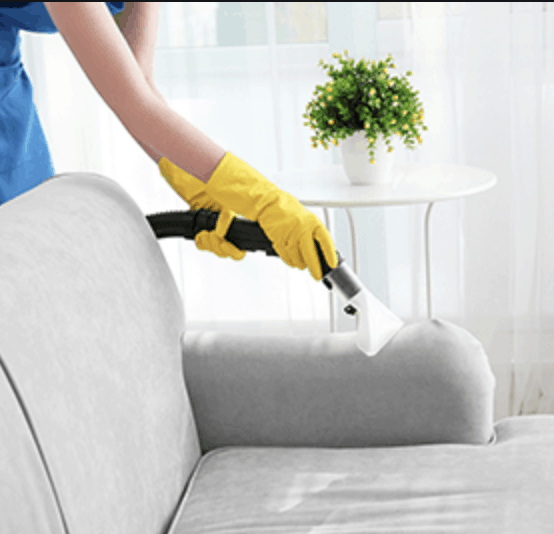
Now it’s time to steam clean the upholstery.
Every steam cleaner is slightly different, so always follow the manufacturer’s instructions for your specific model. Water capacity, detergent use and heat settings can vary.
Most machines require you to:
Remove the water tank
Fill it with warm water
Add upholstery cleaner if your model allows it
Reattach the tank securely
Avoid overfilling — too much water can cause leaks or leave the upholstery overly damp.
Move the steam cleaner slowly and steadily across the fabric. Let the machine do the work rather than pressing down hard.
How to avoid damaging upholstery when steam cleaning
Steam cleaning is generally safe, but a few simple precautions make all the difference:
Test a small hidden patch first
Avoid holding the steam nozzle in one spot for too long
Don’t soak the fabric — upholstery should feel damp, not wet
Keep the nozzle moving to prevent heat damage
Check whether your fabric is labelled “S”, “W”, “WS” or “X”
Some delicate fabrics don’t respond well to moisture or heat, so a quick check beforehand can save you from an expensive mistake.
Leave the furniture to dry
Once you’ve finished steam cleaning, the upholstery needs time to dry. You can leave it to dry naturally, ideally with windows open to improve airflow.
If you want to speed things up, you can use:
A fan
A hairdryer on a cool setting
A dehumidifier
Avoid using heat — it can shrink or distort certain fabrics.
Got a lingering stain?
Even after steam cleaning, you may find the odd stubborn stain still hanging on.
White distilled vinegar or even vodka can help. Lightly blot the stain with a cloth soaked in either liquid. Once dry, the smell will disappear and the stain should lift.
How often should you steam clean upholstery?
How often you steam clean depends on how much the furniture is used. A sofa in a busy office reception will need more frequent cleaning than a chair in a quiet meeting room.
As a general guide:
High‑use areas: every 3–4 months
Medium‑use areas: every 6 months
Low‑use areas: once a year
Spot cleaning in between helps keep everything looking fresh.
In summary
We hope you’ve found this guide on how to clean upholstery with a steam cleaner useful. With the right preparation and technique, the process is simple, safe and highly effective — whether you’re cleaning at home or in the workplace.