Schools are increasingly looking for ways to reduce their environmental impact, and cleaning is one of the most effective places to start. When you think about how many classrooms, corridors, toilets and communal areas are cleaned every single day, it becomes clear just how much product, water and energy a school uses over the course of a year. The good news is that eco‑friendly cleaning doesn’t mean compromising on hygiene — in fact, when done properly, it often improves it.
At Green Fox Cleaning, we’ve supported schools that wanted to move towards greener cleaning methods without sacrificing safety or standards. We’ve seen first‑hand how small changes can make a big difference, from switching to microfibre systems to choosing products with shorter contact times and lower environmental impact. This guide brings together the most effective sustainable practices we’ve used in educational settings across the UK.
(Educational Cleaning Service: Complete Guide)
Why eco‑friendly cleaning matters in schools
Schools are unique environments. They’re full of young people, many of whom have allergies, asthma or sensitivities to strong chemicals. When harsh products are used unnecessarily, it can affect air quality and cause discomfort for students and staff. Eco‑friendly cleaning focuses on reducing chemical exposure while still maintaining excellent hygiene — something every school can benefit from.
We’ve worked with schools where switching to greener products immediately improved the smell and feel of the building. Classrooms felt fresher, and staff commented that the air didn’t feel as “heavy” after cleaning. These small improvements add up to a healthier learning environment.
Choosing safer, low‑impact cleaning products
Eco‑friendly cleaning starts with the products themselves. Many modern cleaning solutions are designed to be effective while using fewer harsh ingredients. They’re safer for the environment, safer for cleaners and safer for the students who spend their days in the building.
We’ve tested a wide range of products over the years, and the best ones strike a balance: strong enough to remove dirt and bacteria, but gentle enough to avoid unnecessary chemical exposure. Schools often assume eco‑friendly products are weaker, but that’s rarely the case now. The industry has moved on, and the right products can deliver excellent results.
(What Are Cleaning Chemical Contact Times?)
Microfibre: one of the simplest ways to go greener
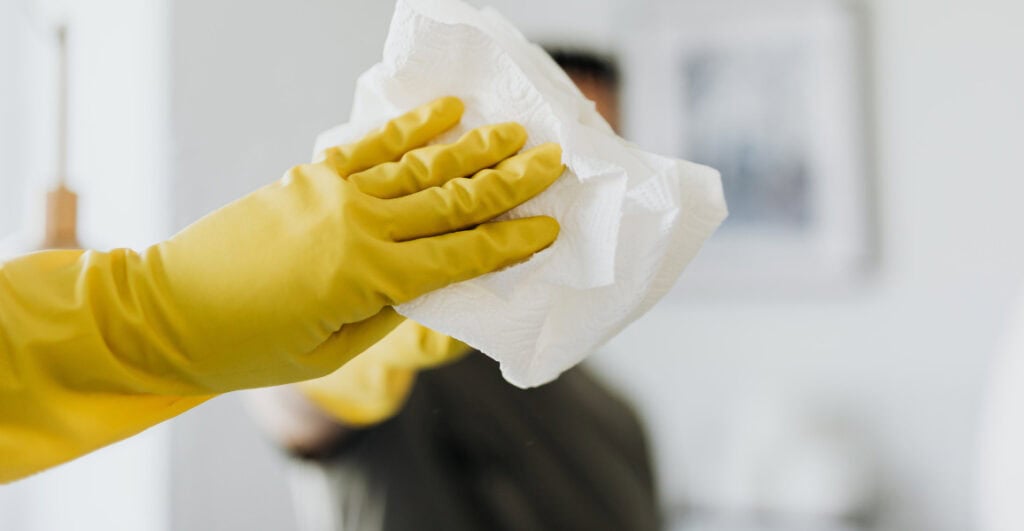
If there’s one change that consistently reduces chemical use in schools, it’s switching to microfibre cloths and mops. Microfibre traps dirt and bacteria far more effectively than cotton, meaning cleaners can achieve better results with less product.
We’ve seen schools cut their chemical usage significantly simply by adopting microfibre systems. The fibres act like tiny hooks, lifting dirt rather than pushing it around. This means surfaces stay cleaner for longer, and cleaners don’t need to rely on strong chemicals to get the job done.
Of course, microfibre only works when it’s laundered correctly. In settings where professional laundry isn’t possible, disposable cloths may still be the safer option — especially in high‑risk areas like medical rooms or toilets.
(Microfibre or Disposable Cloths?)
Reducing waste through smarter cleaning practices
Eco‑friendly cleaning isn’t just about products — it’s about habits. We’ve worked with schools where simple changes made a noticeable difference. For example, using refillable bottles instead of single‑use containers, or switching to concentrated products that reduce packaging waste.
Another effective change is training cleaners to use the right amount of product. Over‑dosing is common in schools, often because cleaners assume “more product means better cleaning”. In reality, using too much can leave residue that attracts more dirt and requires more cleaning later.
Ventilation and air quality matter too
Good ventilation is one of the most overlooked aspects of eco‑friendly cleaning. When classrooms are aired out regularly, cleaners don’t need to rely on strong fragrances or heavy‑duty products to mask odours. Fresh air does half the work.
We’ve supported schools where simply opening windows for a few minutes between lessons made a noticeable difference to how the building felt. Cleaner air means fewer allergens, fewer odours and a healthier environment overall.
(How to Reduce Germ Spread in Classrooms)
Eco‑friendly cleaning in early‑years settings
Nurseries and early‑years classrooms need special attention. Young children spend more time on the floor, touch everything and often put objects in their mouths. Using gentle, child‑safe products is essential.
We’ve cleaned nurseries where switching to eco‑friendly products reduced skin irritation and improved the overall feel of the space. Toys, mats and soft furnishings benefit from gentler cleaning methods too, as harsh chemicals can break down materials over time.
(How to Clean Nursery Toys Safely)
Sustainable deep cleaning
Deep cleaning doesn’t have to be chemical‑heavy. Modern carpet cleaning systems, for example, use far less water and product than older methods. Floor maintenance products have also improved, offering strong results with lower environmental impact.
We’ve carried out deep cleans during school holidays where the focus was on sustainability — and the results were just as impressive as traditional methods. The key is choosing the right equipment and understanding how to use it effectively.
(How Often Should a School Be Deep Cleaned?)
Why eco‑friendly cleaning is good for budgets too
Many schools assume that greener cleaning is more expensive. In reality, it often reduces costs. Microfibre lasts longer than cotton. Concentrated products go further. Better training means less waste. And when carpets, floors and surfaces are cared for properly, they last longer — reducing maintenance costs.
We’ve seen schools save money simply by switching to smarter, more sustainable cleaning routines.
How Green Fox Cleaning supports eco‑friendly schools
We work with schools that want to reduce their environmental impact without compromising hygiene. Our teams are trained in sustainable cleaning methods, and we use products that balance effectiveness with environmental responsibility.
Whether it’s daily cleaning, deep cleaning or specialist services, we tailor our approach to each school’s needs — and we always prioritise safety, sustainability and long‑term value.
A greener cleaning routine creates a healthier school
Eco‑friendly cleaning isn’t a trend — it’s a smarter, safer way to care for educational environments. When schools adopt sustainable practices, the whole community benefits. Cleaner air, safer products and healthier classrooms all contribute to a better learning experience.
If you’d like to learn more about how we support schools across the UK, you can visit our educational cleaning page here:
👉 Educational Cleaning Service