We would love to hear from you, to discuss how our business can help yours. We would be delighted to visit your premises to provide a free no obligation quote, whether you are yet to employ a cleaning company, or if you are unhappy with your current one. You can either call us on 0333 050 1139 or fill in this form - We will call you back as soon as possible.
Can you remove water marks from stainless steel appliances? 3 Great tips here on how to do so!
Table of Contents
What causes water marks on stainless steel appliances?
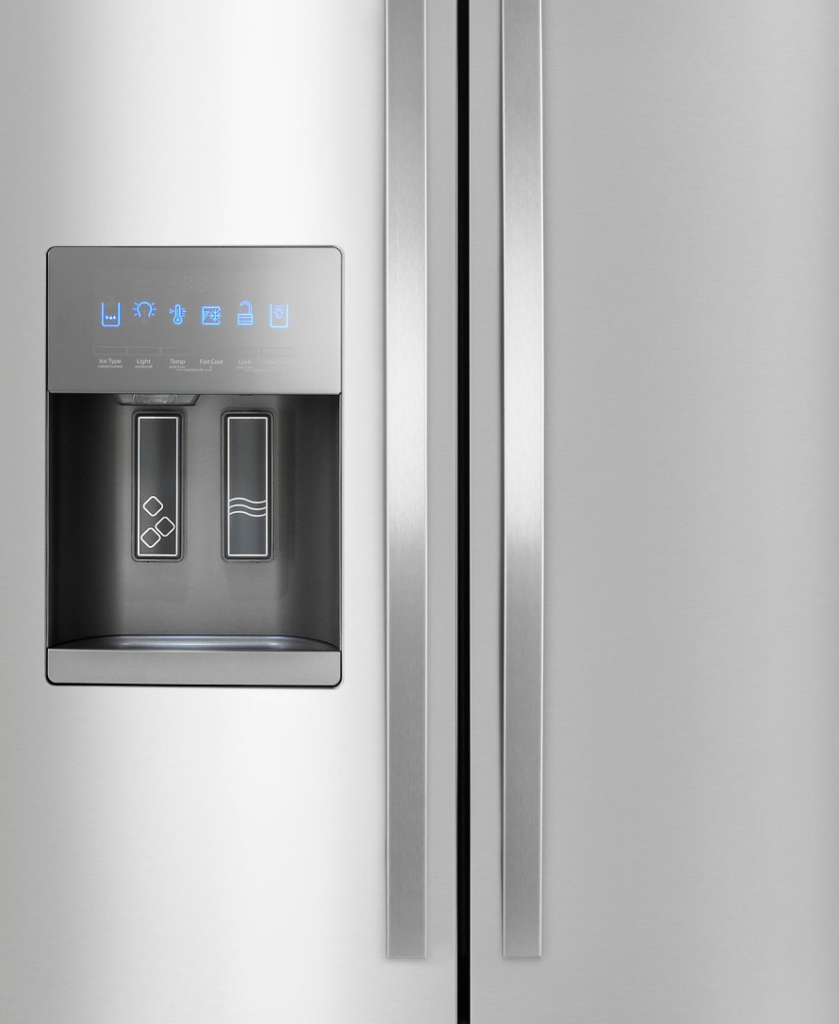
In modern kitchens and office washrooms, nothing stands out quite like sparkling stainless steel. It’s sleek, stylish and works with almost any colour scheme. When it’s clean, it gives a fresh, professional look that instantly lifts the whole space.
But stainless steel has a downside — it shows everything.
Fingerprints, smudges, splashes and especially water marks can quickly dull the shine and make appliances look tired and uncared for.
The good news is that although stainless steel marks easily, it also cleans up beautifully with the right approach. A few simple techniques can restore that “just installed” look in minutes.
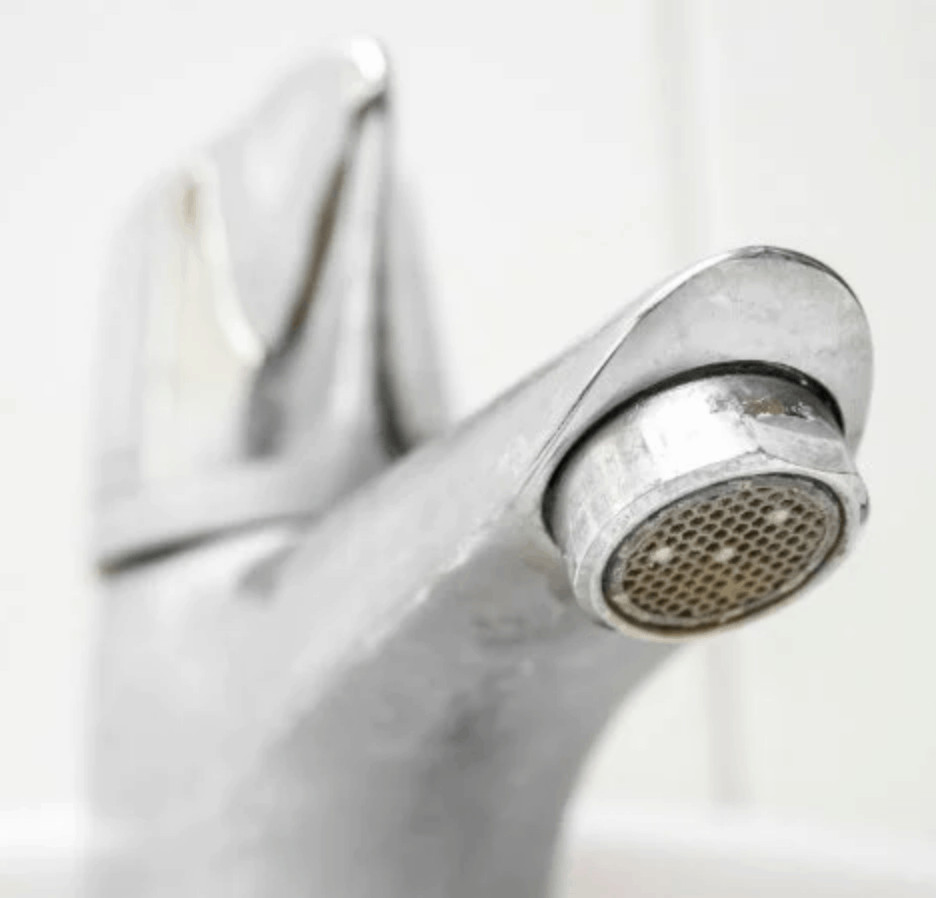
Water marks can be a real frustration
How to tackle water marks on stainless steel
For everyday cleaning, you’ll be pleased to know you often don’t need anything more than a microfibre cloth.
Daily cleaning method
Wet a microfibre cloth and wring it out so it’s damp, not dripping.
Wipe the appliance gently, following the grain of the steel.
Use a second dry microfibre cloth to remove any remaining moisture.
This second wipe is essential — leftover droplets can become new water marks.
Important:
Always use microfibre cloths.
Avoid sponges or anything abrasive, as they can leave fine scratches that dull the finish.
Why microfibre works best
Microfibre cloths grab dust and residue rather than pushing it around. They’re soft enough not to scratch the steel, but textured enough to lift marks easily. Sponges and rough cloths might feel harmless, but over time they create tiny scratches that catch the light and make the surface look cloudy.
A couple of good microfibre cloths are worth their weight in gold for stainless steel care.
If your stainless steel feels sticky or greasy
Sometimes water alone won’t cut through fingerprints or cooking residue.
In that case:
Put a drop of washing‑up liquid on your damp microfibre cloth.
Wipe the appliance gently.
Use a second cloth dampened with plain water to remove any soap.
Finish with a dry cloth to remove moisture.
This three‑cloth method leaves a streak‑free finish every time.
Water marks that water won’t remove
Some water marks are more stubborn, especially if they’ve been sitting for a while. When water and washing‑up liquid aren’t enough, it’s time to bring out two items you probably already have in your kitchen:
Distilled white vinegar
Baking soda
How to remove tough water marks
Heat some distilled white vinegar until it’s hot (not boiling).
Soak a thick, clean towel in the vinegar.
Place the towel over the water mark for 30 minutes.
Remove the towel and sprinkle baking soda over the area.
Scrub gently with a soft cloth until the mark disappears.
Wipe clean with water and dry thoroughly.
This combination breaks down mineral deposits without damaging the steel.
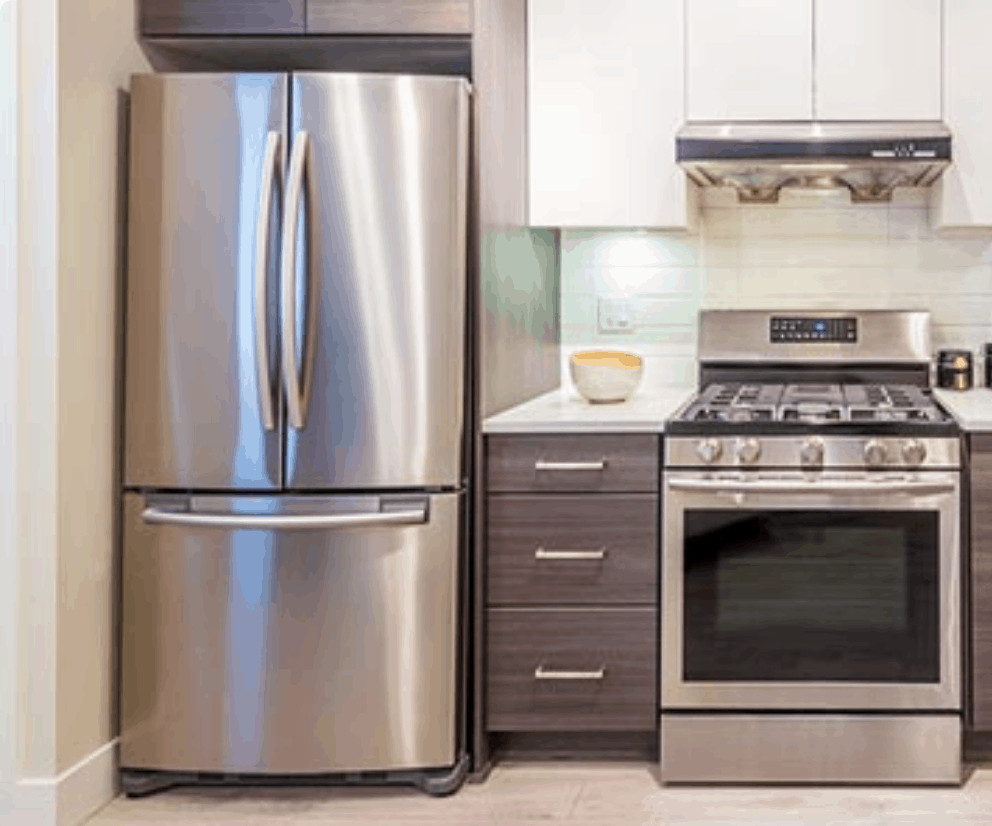
Water marks can appear on all stainless steel appliances
Why vinegar works so well on stainless steel
Vinegar is mildly acidic, which makes it great at dissolving the mineral deposits left behind by dried water droplets. It’s strong enough to lift the marks but gentle enough not to harm the stainless steel surface. Baking soda adds a bit of safe scrubbing power without scratching.
It’s a simple, low‑cost solution that works far better than many branded cleaners.
There is a water mark I just can’t get off!
If you’ve tried everything and the mark still won’t budge, it may be time to use a specialist metal stain remover. These products are designed specifically for stainless steel and can tackle marks that household products can’t.
If you choose this option, always follow the instructions carefully to avoid damaging the finish.
In summary
Hopefully you’ve found this guide useful, and water marks on stainless steel appliances — whether at work or at home — will soon be a thing of the past. The cleaning methods are simple and don’t require any special skills, just the right approach.